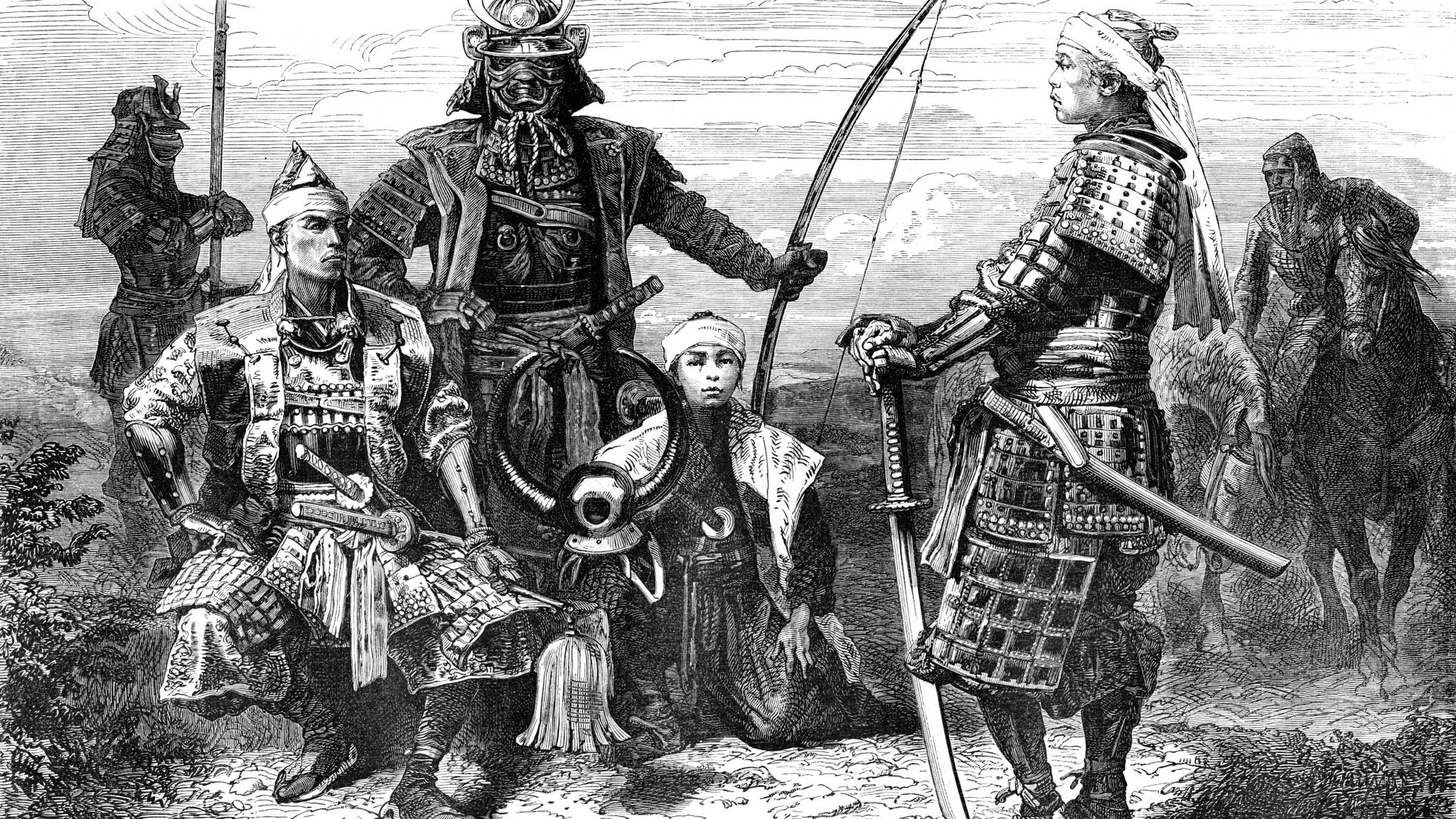
Yasuke arrived in Japan in 1579 as an Attendant to a high-ranking Italian Jesuit missionary. He is said to be from the modern day Mozambique, which is located in South Africa.
There is a famous story about the “scrub-test” Yasuke had to go through. At that time, almost no Japanese person have ever seen a person of African descent, so his arrival caused a huge sensation that people climbed over one another to get a glimpse of him, sometimes resulting in crushed fences or injuries. When he met Oda Nobunaga, the most powerful Japanese warlord at that time, Nobunaga believed that his body was covered in ink, and ordered him to scrub off his skin to prove it is real.
Once Nobunaga realized that Yasuke was real, he took a great liking to him. He enjoyed Yasuke’s company, as Yasuke was reportedly highly intelligent and even spoke some Japanese. He was described by them as having a strength equivalent of ten men. Through this, Nobunaga took Yasuke to his service to make him a Samurai, offering him residence and katana. It is recorded that Yasuke was a part of a close inner circle of Nobunaga and often dined with him and his other close friends.
His presence in the history of Japan was short but intense. He was a part of the famouns Hono-ji incident, where one of Nobunaga’s generals betrayed and cornered Nobunaga at the temple of Hono-ji in Kyoto. Yasuke fought alongside Nobunaga’s forces during the ambush. After Nobunaga committed seppuku (ritual suicide) to avoid capture, Yasuke escaped and joined Nobunaga’s son, Oda Nobutada, to continue the fight. This was in 1582, 3 years since Yasuke’s arrival, and after this event he was captured and was ordered to be sent to the “Temple of the Southern Barbarians” (the Jesuit mission in Kyoto). After this event, his name never reappeared on history, and no one knows if he stayed in Japan or went back home.
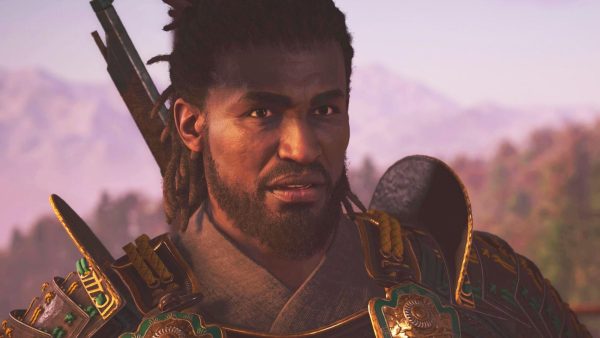
His remarkable presence in the Japanese history influenced pop culture. In “Assassins Creed Shadows”, a very popular and successful video game by Ubisoft, Yasuke was featured as one of the two playable characters, meaning that he is in the absolute center of the gameplay. It was the first time the franchise featured a real historical figure as a protagonist, and it did spark some controversy with how historically accurate this was. But undeniably, the title was a success, and it shows how unique and exceptional Yasuke was, to the point that he appears in a modern title like this.
This modern fascination proves that Yasuke’s story is not just a thing of the past, but a living bridge between eras. In a world that often views history through a narrow lens, he stands as a symbol of early cultural exchange and globalism. His presence at the side of Oda Nobunaga challenges our modern definitions of identity and belonging, showing us that the “closed” borders of history were far more complex than we imagine.