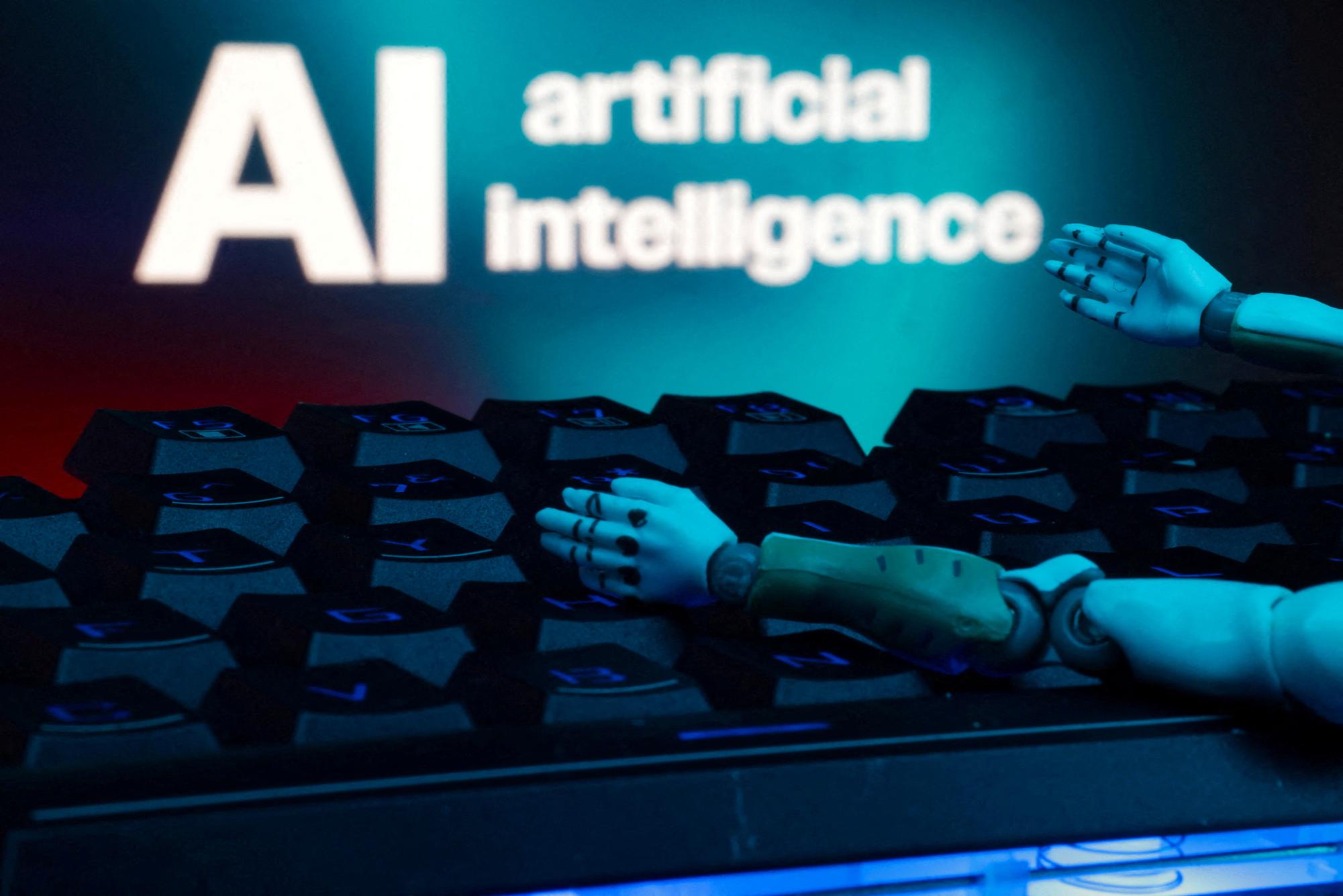
As artificial intelligence(AI) technology advances, the usage of AI has only increased. This is especially prevalent in academics, where students will use it to understand how to solve math problems, learn concepts in science, or sometimes plagiarize it in an English essay. Although plagiarism is a problem, it is imperative for the school to adapt to AI usage and help promote the healthy usage, which they have been attempting to, such as giving subscription version of Gemini, Google’s AI, to all students.
However, plagiarism is not the only problem regarding AI usage in academics. There is a terminology called “Cognitive Offloading”, which is defined as “the use of physical action to alter the information processing requirements of a task so as to reduce cognitive demand.”(Risko and Gilbert 676). In other words, it refers to an act of letting devices such as calculators, smartphones, and now, AI, to perform tasks that human brain is supposed to do – such as calculating, remembering and writing.
One main consequence of cognitive offloading is the deterioration of brain ability. Human brain is an adaptive organ, which adapts to how it is being used every day. So, as cognitive offloading become more common in one’s daily life, the brain function for those tasks will deteriorate, especially for student’s developing brain. A high school student and an AI user, Kai Tatsumi, said that he has used “AI for math and science, which are helpful for solving questions, understanding each step”, but he also commented that he sometimes resort to “immediately use AI after seeing a question I do not understand”.
It is important for us to learn to live with AI. To do that, we need to understand the consequences of using it, and find the best way that minimizes the consequence, while benefiting from it.