
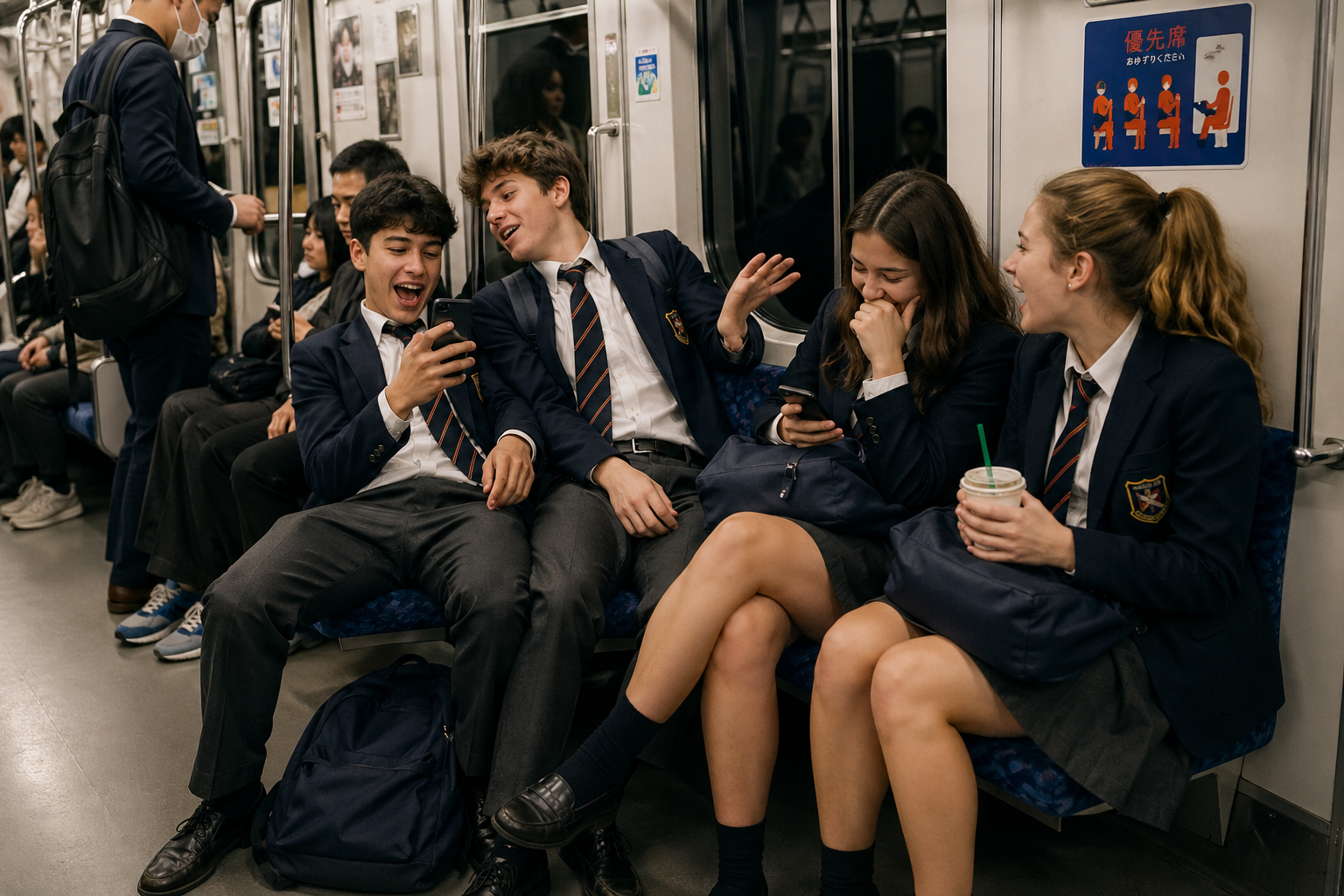
One of the biggest differences is how people behave in public. In Japan, it is common to stay quiet and respectful, especially on trains and buses. Talking loudly, playing music without headphones, or eating while walking can be seen as rude. In busy areas like Shibuya, even though there are many people, there is still a strong sense of order. People line up properly, follow traffic rules, and avoid disturbing others.
For international students, these expectations may feel strict at first. In some countries, being loud or expressive in public is normal. However, in Japan, people often think about how their actions affect others around them. This idea is an important part of Japanese culture and helps keep public spaces clean, calm, and organised.
At schools like St. Mary’s International School, students come from many different backgrounds. This means not everyone is used to the same rules. Because of this, students need to learn and respect local customs. Simple actions like speaking quietly on public transport, not littering, and following rules in public areas can make a big difference.
Living in Japan teaches international students to be more aware of their behaviour in public. While it may take time to adjust, learning these habits helps students fit into the community and show respect for the culture around them.


