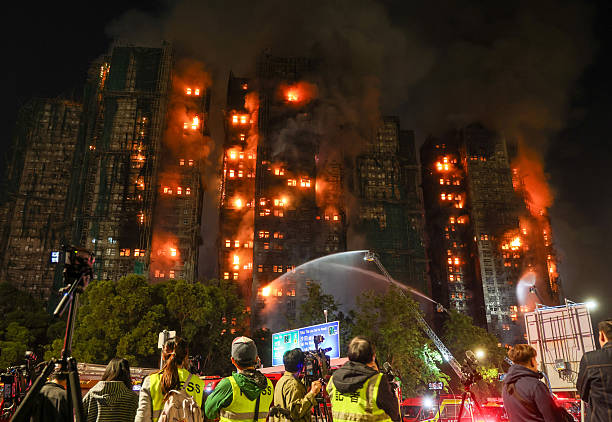
The recent tragedy that happened in the Wang Fuk Housing Court housing complex in Tai Po, Hong Kong, raised serious concerns regarding building safety and regulations.
On Wednesday, November 26th, a fire broke out and rapidly spread across the housing complex that is home to over 4000 Hong Kongers (BBC News). As of now, no one knows what started the catastrophic horror. Experts guess that the low humidity and dry, cold air during the winter may have accelerated the spread. That, along with mesh netting and bamboo scaffolding—a centuries-old traditional, fast, and affordable method used to build some of Hong Kong’s tall buildings—resulted in the unstoppable escalation of flames, burning through buildings and everything inside them.
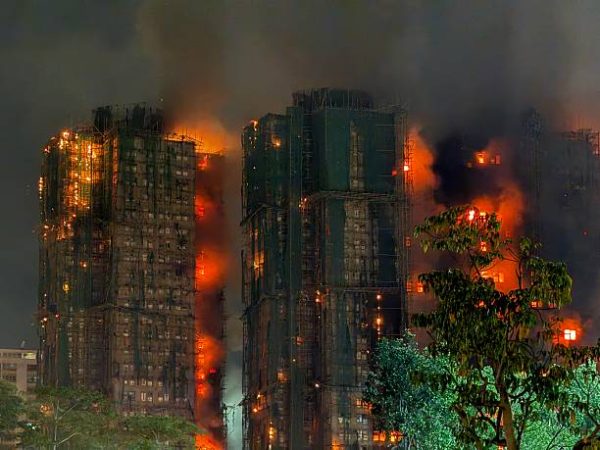
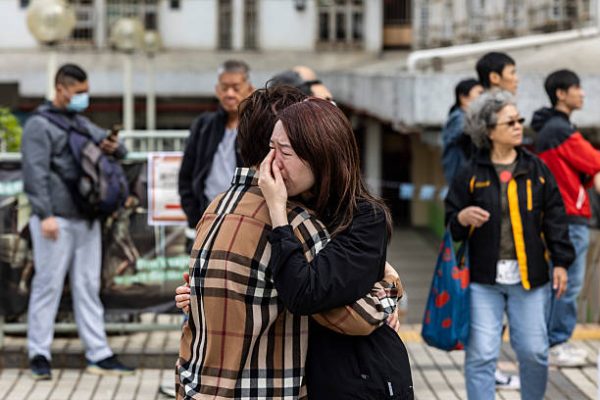
The death toll is at 128 (as of Nov. 28, BBC News). Families and friends are sad about the deaths of their loved ones, but they are even more furious about the cause of the fire. According to Yahoo News, over a dozen suspects have been detained or arrested due to their potential connection to the fire.
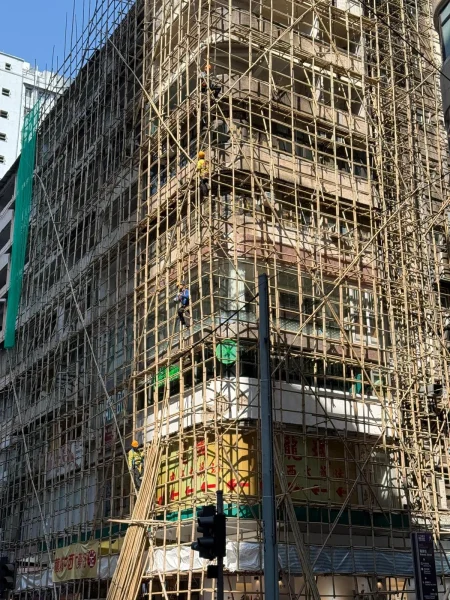
The Hong Kong government had already thought of the potential hazards of bamboo scaffolding; in fact, they started enforcing a switch from bamboo to fire-resistant steel for safety reasons in March of 2025 (The Guardian). However, it still wasn’t enough to prevent the tragedy. This event serves as a warning to Hong Kong and to other major urban districts around the world, including Tokyo.
As population density increases with urban development, the risks increase exponentially. Therefore, governments and designers need to be extra careful in how they operate and design buildings. The most recent major fire in Tokyo was the Myojo 56 building fire in Kabukicho, Shinjuku, in 2001, resulting in 44 deaths and an additional 3 injuries (Wikipedia). Similar to the Hong Kong fire, officials were also unable to identify the cause; however, there are suspicions of arson—intentionally setting a fire. One of the reasons for the severity of the fire was the non-compliance with fire safety rules: escape routes were used as storage spaces, fire doors were not operative, and the smoke/fire alarms seemingly malfunctioned. Hence, dense urban areas with a stunning number of high-rise buildings need to be extra cautious about fire hazards, as a tiny flame could result in devastating consequences for hundreds of thousands of families.