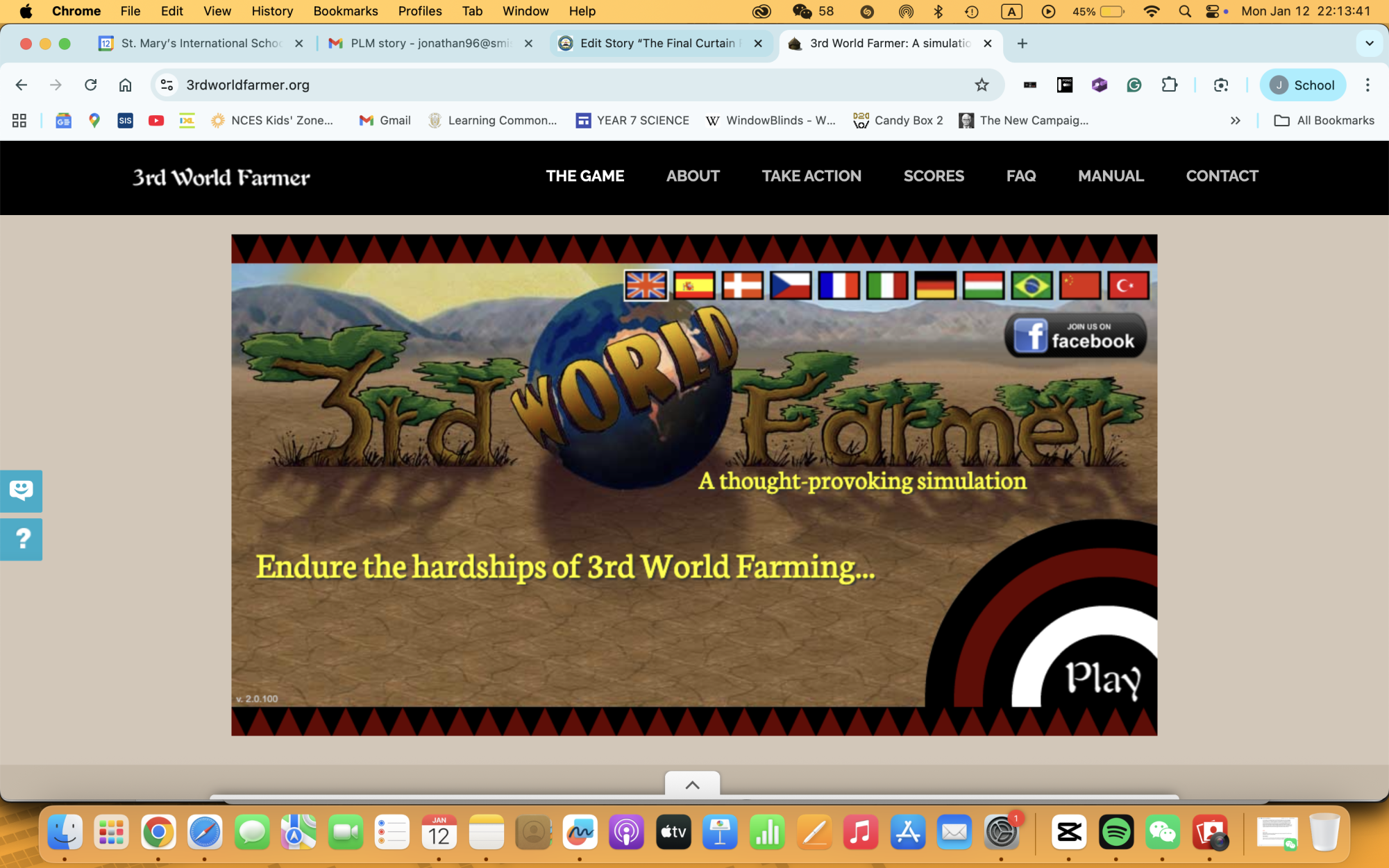

Educational software tends to be the laughing stock of the video game world and has been the subject of much ridicule. However, Third World Farmer, prominently featured as part of the Personal Life Management (PLM) curriculum, is a stark reminder that this isn’t always the case. Developed by a team of passionate college students at the IT University of Copenhagen, the game aims to accurately simulate the hardships of life in developing countries, with the hope that players will discuss and take action to address third-world issues. In their efforts to do so, the developers not only provide a thoughtful experience but also addictive gameplay by incorporating elements of entrepreneurship, risk, and upward mobility.
Background
Made on a meager budget, the prototype was initially a school project at the IT University in Copenhagen, made by a group of college students there, in the spring of 2005. Due to the positive feedback received, the game was polished and released online in 2006, to critical acclaim by both players and educators. Since its release, numerous bug fixes have been implemented, and Third World Farmer has been translated into over 11 languages, including Spanish and Standard Mandarin.
Core gameplay
Centered around a poor African family on a farm, the player is only given a meager amount of money to buy seed to plant and harvest crops. From here on out, the player is on their own to prosper or starve. Like in real life, with each turn, which represents a year, an unexpected event occurs to the player that could either positively or negatively impact them. Examples of these regular occurrences include the national bank crashing, harvest failures, and refugee raids. If the player manages to bounce back from these setbacks, they could gradually expand their farming operations by purchasing additional resources, such as livestock to diversify profits, infrastructure to increase market reach, and even a local school for cheaper education, to increase the dowry when children are married off. If the player loses all of their money or all family members die of diseases, they lose. The game ends in victory when all ‘projects’, represented by a lightbulb symbol, are completed.
More details about the gameplay can be found here.
Verdict
Third World Farmer is a game like no other, representing the quintessence of balance between education and fun. The difficulty of the game doesn’t turn away, but entices. The possibility of wealth keeps the player optimistic about their chances of making it big. They essentially become a third-world farmer, without it being blatantly forced onto them, which is the genius of the game. Overall, the game is highly recommended to all gamers!