
What is StuCo? What do they do? Why do they matter? Why should I care? These are all very good questions, and regrettably, StuCo hasn’t answered them very well over the past four years. However, that is set to change. As of March 13th, 2026, the StuCo v2.0 Initiative, created and designed by Grade 9 Class President Jonathan (’29), is live, and it’s making your voice and opinions matter.
Through three revolutionary updates, StuCo v2.0 aims to transform StuCo into a more modern, participatory, and efficient representative body for high school students. No longer will StuCo be a stranger to your causes, and never before will your unrealized ideas, from requesting assistance with clubs to suggesting improvements with advisories to choosing the best in elections, be easier and cleaner to realize.
Specific Overview Of Guidelines
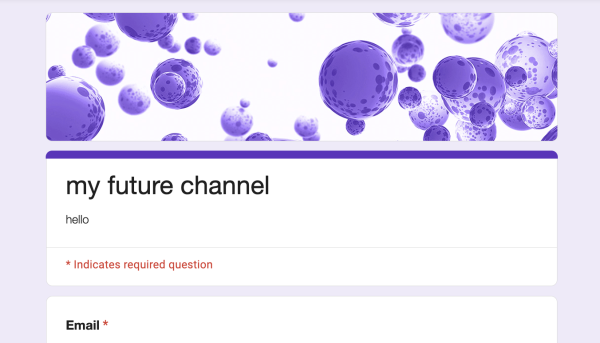
The first, introductory update in the Initiative is the Smart Social Services Act. Aiming to provide the student body with a convenient and modernized experience in self and group advocacy, through two ‘smart services’:
- ‘My Future Channel’: Eligible for all members of the St. Mary’s high school student body, individual students could either submit a suggestion or criticism directly for review. Each suggestion or criticism will be notified to the Student Council 2026-26 Google Group email address and will be adequately reviewed at the start of each StuCo session. However, due to concerns of unhelpful spam, the channel would operate on a rubric, and submissions failing the rubric will not get an adequate response.
- ‘We The Students’: an ‘electronic petition’ (e-petition) service that allows individuals or a group of students to create a petition draft for a cause using a ‘Petition Submission’ Form on a webpage. In the form, petitioner (s) will list any collaborators, a brief description of the petition, and a time limit of up to two weeks to collect signatures to notify StuCo for review. Every petition topic will be accepted for distribution via ‘We The Students’ through an automated process. Petitions will then be publicly displayed on a publicly accessible slide. At the end of the promotion period, the petition is delisted, closed, and submitted for evaluation by the StuCo. The original petitioner(s) will be notified whether their petition idea is accepted and will be implemented.
However, where would all the smart social services be housed? How can students access them in a convenient and fast manner?
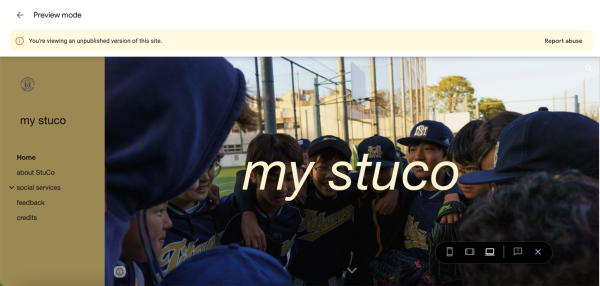
The second update in the Initiative, the Web Framework Act, will aim to do just that, through the creation of a formalized and sleek ‘My StuCo’ website, aiming to be the hub for all things StuCo.
Based on Kevin Lee’s Transparency & Accountability Proposal, StuCo-related ‘smart social services’, communication channels, and established information, such as the Constitution, are located inside My StuCo. This is for a widely accessible, user-friendly, intuitive, and modern experience for students. The StuCo’s Instagram account and section on the school newspaper, the Diplomat, will still be primarily used for press releases, public promotions of events and new guidelines, and announcements.
The website is created by the Big Brain Department, a group of pretty smart people who will both design and promote ‘My StuCo’. The department, for these purposes, is split into two departments, the Programming & Development (P&D) and the Usability & Promotion (U&P)’ division.

The final, but arguably the most important update in the Initiative, would be the Fair Choice Act. For a long time, students have often felt disenfranchised from elections and that their votes don’t truly count. The Fair Choice Act aims to make elections more participative and equitable through:
- ELECTION LAWS:
- Executive Q&As will be phased out in favor of a ‘comprehensive town hall’ during a special assembly on Advisory Day.
- Each executive candidate in the town hall is allocated one minute to make a speech and four minutes to answer questions. That way, more students could be more informed about what the candidates’ platform is.
- Extension of the current non-Executive election campaign period to five days, with a non-Executive candidates’ town hall per grade level occurring during Advisory, except for Rising Freshmen.
- For rising Freshmen, whether and when a town hall is hosted for their non-Executive candidates should be under the jurisdiction of MS StuCo.
- VOTING SYSTEM REFORM
- The replacement of first past the post voting, where voters can only choose one candidate, for both non-Executive and Executive elections, with STAR voting.
- In the STAR voting system, voters rate candidates 0 (worst) to 5 (best) stars. The two highest-scoring candidates will then advance to an automatic runoff round, where votes will be given to whichever of the two finalists the voter scored higher. The finalist preferred by more voters in this head-to-head runoff wins the election.
- To assist in tabulating votes, STAR Voting Elections Google Extension will be used in the conduct of these elections. MORE ABOUT STAR VOTING HERE
Conclusion
StuCo v2.0 is the dawn of a new era for more active student empowerment and realizing possibilities that have been previously deemed unthinkable. It is a gift to the bold thinkers, the risk-takers, and the visionaries, and above all, it is a stronger bridge between the school administration and the student body. You have nothing to lose.