


The conflict between China and Japan has been ongoing for about a century, and tensions between the two have intensified in recent months. This conflict has the power to greatly affect Japan’s economic state. So what exactly does the conflict entail?
The current crisis started in November 2025, when Japanese Prime Minister Sanae Takaichi stated, “If China attacks Taiwan, it could be an existential crisis for Japan.” At the time, Taiwan was under close watch by the Chinese government, while Japan had a positive, cooperative relationship with Taiwan. Through this statement however, Takaichi implied the possibility of Japan using its military forces to assist Taiwan if China were to invade. China strongly opposed this, as her comment suggested that Japan viewed Taiwan as a separate country from China.
In response, the Chinese government countered with threatening comments about Takaichi. Although Japan formally protested these comments, China refused to back down, demanding that Takaichi take back her statements. China then took economic action, banning Japanese seafood imports, restricting travel to Japan, and restricting exports of rare-earth materials. Even going as far as to demand the return of its pandas, a move that has impacted the business of Japanese zoos.
Even with these actions being taken, Japan refused to withdraw its statement, saying that its comments regarding Taiwan were consistent with Japanese policy. Japan also advised its citizens living in China to prioritize their safety.
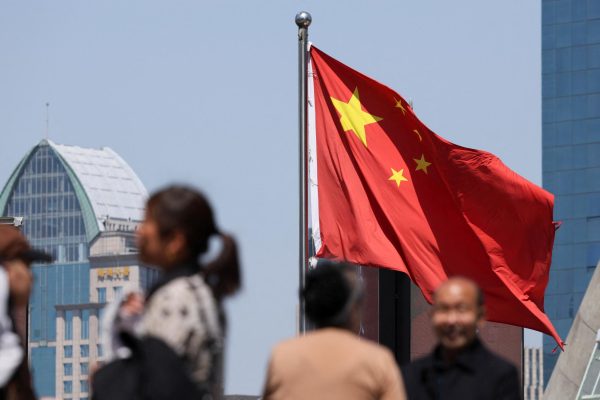
As a result of this tension, Chinese tourists visiting Japan have decreased in a sizable way, trade has become restricted, and military tensions have continued to rise.
In Japan’s economy, various companies are starting to feel the blow of this conflict. According to Reuters, about 9% of Japanese companies are already experiencing negative effects, while about 35% are expected to be impacted in the near future. Key industries are particularly worried about the supply chain of electronics and minerals. With 25% of Japan’s imports relying on China, the economy currently faces a major risk. This tension is expected to reduce Japan’s GDP growth by about 0.2 percentage points, which translates to about 1.16 trillion yen. Between the decline in tourism and the disruption of critical trade, Japan’s economy now faces a period of deep uncertainty and the threat of a major collapse.
Works Cited
“Poll Shows Japanese Firms Face Pressure from Deteriorating Ties with China.” Global Times, 15 Jan. 2026, www.globaltimes.cn/page/202601/1353269.shtml. Accessed 31 Mar. 2026.
“Takaichi’s Taiwan Tumult: A Closer Look at the Japanese Leader’s Contentious Remarks.” The Japan Times, 3 Dec. 2025, www.japantimes.co.jp/news/2025/12/03/japan/explainer/explainer-japan-existential-crisis/. Accessed 31 Mar. 2026.

