












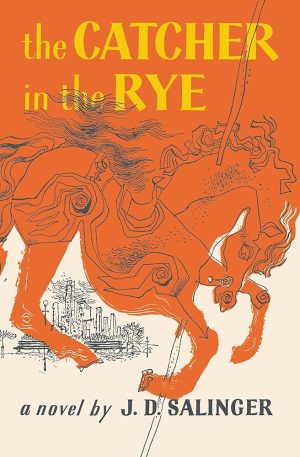

The Catcher in the Rye, written by J.D. Salinger and published in 1951, is a classic novel that follows sixteen-year-old Holden Caulfield after he is expelled from his high school. Set in New York City, the novel explores themes such as identity and fear of being an adult. Through Holden’s perspective, Salinger illustrates an honest portrayal of vulnerability and teenage confusion, allowing readers to experience the world through the eyes of a troubled adolescent.
The Catcher in the Rye follows Holden Caulfield, a high-schooler who has been expelled for failing all the classes. After being expelled, Holden leaves school early and starts wandering around New York City. During his wandering, he encounters former teachers, old friends, strangers, and his younger sister, Phoebe. Rather than focusing on dramatic events, the novel focuses on Holden’s thoughts and conversations along the way. Through the novel, Holden criticizes the “Phoniness” of the adult world and expresses fear of growing up. His dream of being the “catcher in the rye” — protecting children from falling into adulthood — symbolizes his desire to preserve innocence.
One notable aspect of the novel is the First-Person Narration. The entire story is told from Holden’s perspective, making the novel highlight the personalities and emotions of Holden. Readers gain detailed access to Holden’s confusion and insecurities. This technique helps the reader understand and empathize with Holden’s inner feelings. However, the style can also be frustrating. Holden often repeats himself, and his negative diction overly shows aggressiveness towards others. At times, the pacing feels slow, and his pessimistic tone may make it difficult to sympathize with him. While these aspects may be intentionally reflecting his mental and emotional state, they can make the reading experience less engaging for some students.
Overall, The Catcher in the Rye is a psychological novel that illustrates the confusion of adolescence and growing up. Although Holden’s negative perspective and repetitive narration may not appeal to everyone, the novel remains powerful in its exploration of the changing emotions of Adolescence. For students who are scared or confused about ‘growing up,’ the novel is worth reading. The Catcher in the Rye challenges us to think about innocence, identity, and what it truly means to grow up: questions that are still relevant for teenagers now.