










As sponge cities continue to reshape city landscapes across the Middle Kingdom, they exemplify a more natural approach to flood management that harmonizes infrastructure with its surroundings. By emphasizing environmental sustainability and community well-being, these innovative designs will enhance the quality of life for urban residents for decades to come.
As China advances into the 21st century, a new model for urban planning and flood control, designed by the late famed urban designer Yu Kongjian, is paving over the man-made concrete infrastructure that was once a common sight across the world: sponge cities. Originating from a need for an alternative to man-made “grey” infrastructure that was often inefficient in preventing flood damage. Unlike traditional models, where floodwater is released into a new area, sponge cities would soak up water instead through several eco-friendly architectural features like wetlands and permeable concrete, with beneficial side effects for the surroundings and environment. Since its initial implementation in 2015, the sponge cities pilot programs have received acclaim for revitalizing areas that have been in danger of urban decay, and by 2030, over 80% of Chinese urban areas are planned to become sponge cities.
What exactly is a sponge city?
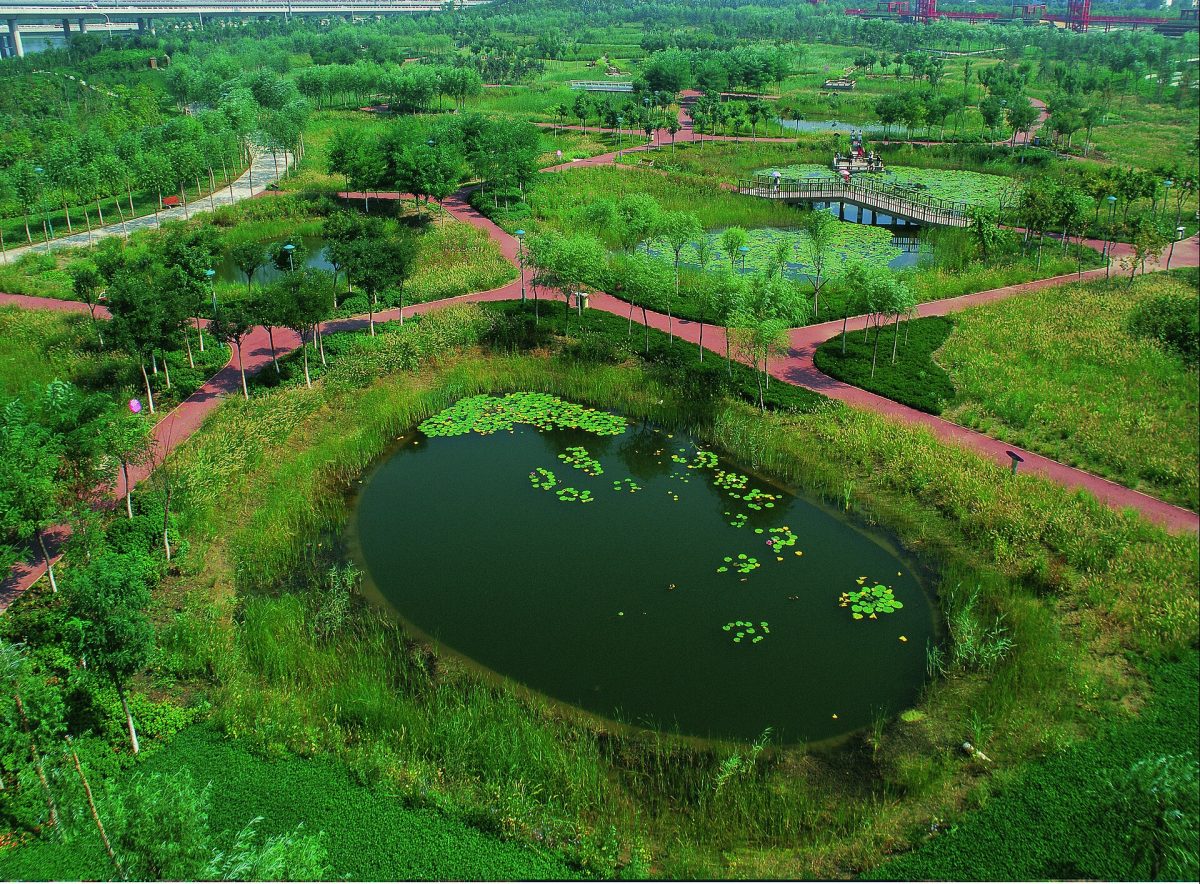
Specifically, a sponge city is a designed urban area that has been proposed to mitigate floodwater and stormwater damage in a more environmentally-friendly and sustainable manner, in comparison to traditional pipes and similar grey infrastructure. This is done through the absorption, cleaning, and recycling of water instead of channeling it elsewhere, through natural wetlands, green spaces, nature strips, and permeable concrete. While other nations like the United States have similar concepts in urban planning, it should be noted that sponge cities combine ecological and technical planning instead of just the latter.

Origins of sponge cities
It may surprise many that the idea of sponge cities was conceived from a childhood near-death experience. Yu Kongjian, the original designer, was nearly swept away by a river flood in his local commune as a child, only able to survive by holding onto the branches of willow trees and reeds. He recalls the rich natural vegetation along the river that saved him in an interview with NPR: “It was a huge flood. But I survived. You know why? Because I grabbed the willows, weeds, and the reeds along the riverbank.” On the other hand, if the riverbank were lined up with concrete, in a similar fashion to many industrialized rivers, Yu certainly would have drowned.
Yu’s near-death experience in childhood influenced him to, in his career, reshape China’s vision for urban areas, to coexist harmoniously with nature instead of fighting it, which was the opposite of what the industrialized floodwater solutions proposed. While the latter floodwater infrastructure system was much more standard and accepted, many contemporary experts note that these ‘grey’ solutions could only work in controlled situations. However, since most floods are unexpected, the ‘grey’ control system would be unequipped to handle the flood, exacerbating the issues. Additionally, water channelled by the ‘grey’ control system could adversely affect other areas where the water is funnelled to. Therefore, Yu advocated for sponge cities as a way to fight floods through absorbing and storing the water by bringing back spots of nature like ponds and wetlands, instead of fighting it.

Sponge cities’ influences
Sponge cities have been adopted as national urban planning policy in China and are widely acclaimed. Aside from the mitigation of small floods and beneficial environmental effects such as fostering the restoration of wildlife and improving water quality, spaces where the sponge city design is prevalent also serve as a much-needed recreational area for residents to relax. “It’s good to have a place like this for people to relax,” says Li Tao, a resident of Jinhua, Zhejiang Province, about the local sponge-city-influenced Baisha Creek, in an NPR interview. In a way, these refuges from the modern Chinese city allowed citizens to reconnect with nature.